
Owning a car comes with its fair share of expenses, from fuel and insurance to routine maintenance and unexpected breakdowns. Traditional auto repair services can be costly, often requiring upfront payments or expensive service packages that leave car owners feeling financially strained. This is where pay as you go car repair has become an appealing alternative for many drivers. By allowing vehicle owners to pay only for the services they need, when they need them, this model offers a flexible, budget-friendly solution without compromising on quality.
Pay as you go car repair is particularly valuable for those who drive older vehicles, frequently experience minor issues, or want to avoid paying for unnecessary maintenance. It also reduces the risk of falling behind on critical repairs because costs can be spread out over time, aligning with personal budgets. Beyond saving money, this approach promotes smarter car ownership decisions, helping people prioritize essential repairs over optional upgrades. In this article, we’ll explore what pay as you go car repair is, how it works, the types of repairs it covers, its pros and cons, and whether it is the right choice for you.
What Is Pay As You Go Car Repair?

Definition and General Concept
Pay as you go car repair is a service model designed to make vehicle maintenance more accessible and financially manageable. Unlike traditional auto repair services, which often require a lump-sum payment or subscription package, pay as you go allows customers to pay for each repair individually. This approach removes the burden of upfront costs and gives car owners control over when and how they address vehicle issues.
In essence, pay as you go car repair treats vehicle maintenance as a flexible service rather than a fixed contract. It is especially useful for car owners who want to avoid the surprise costs of emergency repairs or those who prefer spreading out expenses across several months. Services under this model often include everything from minor auto repairs to more complex interventions, though some limitations apply. By paying only for what is necessary, drivers can maintain their vehicles responsibly without overspending.
How It Works
The mechanics of pay as you go car repair are straightforward. A car owner identifies a problem with their vehicle and contacts a participating auto repair shop, auto body shop, or mechanic. The service provider assesses the issue and provides a quote for the specific repair. Once the customer agrees, they pay for that service either on the spot or through a flexible payment option, such as monthly installments.
Many pay as you go programs partner with towing services, auto restoration service centers, and glass companies to ensure that a wide range of repair needs are covered. For example, a driver might require a windshield replacement through a glass company or a minor dent repair at an auto body shop, paying only for each service individually. The flexibility of this model ensures that even small-scale repairs, like an oil change or tire replacement, can be handled without committing to large, bundled packages.
How Can Pay As You Go Car Repair Save You Money?
Cost-Effectiveness Explained
One of the primary advantages of pay as you go car repair is its cost-effectiveness. Traditional auto repair plans often bundle services, requiring payment for maintenance or repairs that a vehicle may not immediately need. In contrast, pay as you go lets car owners focus their spending on urgent and necessary repairs. This can prevent overspending on unnecessary services and allow funds to be allocated to other vehicle-related expenses.
By avoiding upfront package costs, drivers also reduce financial stress and gain the ability to respond to unexpected issues in a timely manner. For instance, an unexpected collision may require immediate repairs from an auto body shop, towing service, or mechanic. Paying only for the services required, instead of a pre-paid package, allows car owners to manage their budgets more efficiently while ensuring their vehicle remains in top condition.
Flexible Payment Options
Another way pay as you go car repair saves money is through flexible payment arrangements. Many repair services offer installment options, allowing car owners to spread the cost of repairs over weeks or months. This flexibility is particularly valuable for expensive repairs, such as auto restoration service projects or major engine work.
Additionally, pay as you go repair models often integrate with auto insurance plans, giving drivers the ability to file claims selectively without committing to comprehensive packages. Drivers can also combine services from multiple providers, such as glass companies, auto body shops, and towing services, paying individually for each service rather than locking into a single expensive provider. This flexibility ensures that every dollar spent addresses a real, current need, making it a smarter, more economical approach to vehicle maintenance.
What Types of Repairs Can Be Done with Pay As You Go?

Common Repairs Offered
Pay as you go car repair services typically cover a broad spectrum of maintenance and repair work. Common offerings include standard auto repairs like brake replacements, tire rotations, oil changes, and minor engine work. Auto body shop services, such as dent removal or panel replacements, are often included as well, as are windshield and glass replacements through specialized glass companies.
Mechanics working within pay as you go programs can also handle more specialized needs, including auto restoration service tasks, suspension repairs, and exhaust system replacements. This wide range of services ensures that car owners can address multiple issues as they arise, all while keeping costs manageable and targeted.
Limitations and Exclusions
While pay as you go car repair is versatile, it does have limitations. Some services may not be covered under this model, such as extensive auto restoration projects that require long-term labor or specialized equipment. Certain insurance-covered repairs may also necessitate pre-approval or a different payment method.
Additionally, some pay as you go programs may not include emergency towing service for major breakdowns, leaving drivers responsible for arranging transport separately. High-cost auto body shop interventions, extensive glass company work, or accident lawyer consultations may also fall outside standard pay as you go offerings. It is essential for car owners to review the scope of services carefully to understand what is included and what requires separate arrangements.
What Are the Pros and Cons of Pay As You Go Car Repair?
Advantages of This Payment Approach
The advantages of pay as you go car repair are numerous. Financially, it allows drivers to spend only on the repairs they need, avoiding unnecessary expenditures. It provides flexibility in payment timing and offers access to a wide range of services, from auto repairs to auto restoration service projects.
Convenience is another significant benefit. Car owners can schedule services when needed without being tied to long-term contracts. For drivers with older vehicles or those prone to minor issues, this model reduces stress and provides peace of mind. Integration with towing services, glass companies, and auto insurance plans further enhances the value by ensuring that a comprehensive set of solutions is available on a case-by-case basis.
Potential Disadvantages
Despite the benefits, pay as you go car repair has potential drawbacks. Since services are paid individually, costs for multiple repairs can accumulate over time, sometimes exceeding a bundled package deal. Quality may vary between providers, making it essential to choose reputable mechanics and auto body shops.
Some drivers may also find that pay as you go is less convenient for emergency situations, especially if towing service or urgent glass replacement is required outside business hours. Additionally, comprehensive projects, like full auto restoration service, may not be feasible under this payment model, limiting options for drivers who prefer one-stop solutions.
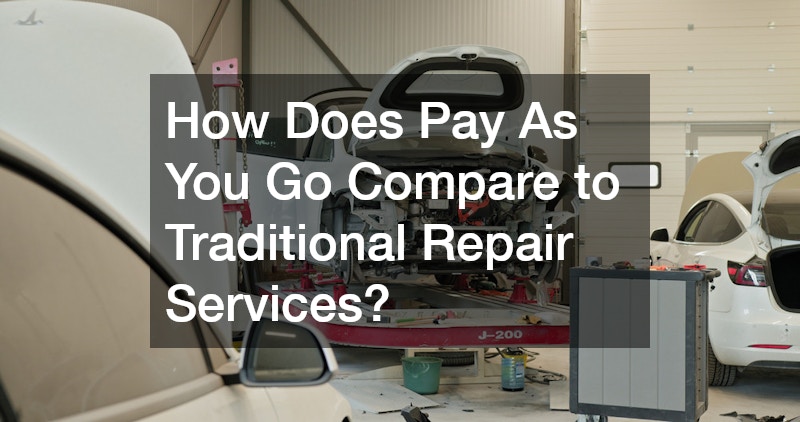
How Does Pay As You Go Compare to Traditional Repair Services?
Comparison of Costs
When comparing pay as you go car repair to traditional repair services, the differences in cost structure become clear. Traditional auto repair services often operate on fixed packages or pre-paid maintenance plans. These packages can include routine auto repairs, oil changes, and even services from auto body shops or glass companies. While convenient, they may charge for services that a vehicle doesn’t need at the moment, resulting in unnecessary expenditures.
Pay as you go, on the other hand, ensures that drivers only pay for services when required. For example, a minor dent repair from an auto body shop or a windshield replacement from a glass company will only cost what is necessary for that repair. Over time, this model can be more economical, especially for car owners with older vehicles who may not need all the services bundled into traditional plans. Coupled with flexible payments and integration with auto insurance plans, the overall savings potential is significant.
Service Quality Differences
A common concern with pay as you go car repair is whether service quality matches traditional repair services. While quality can vary by provider, many reputable mechanics, auto body shops, and glass companies maintain high standards regardless of payment model. In fact, the competitive nature of pay as you go services often motivates providers to ensure efficient, reliable work to attract repeat customers.
Auto restoration service projects, oil changes, and towing services are generally handled with the same professionalism as in traditional setups. Customers can also read reviews and check credentials before selecting a provider, ensuring they receive top-tier service. The key is to choose well-established providers with experience in their respective fields, whether for standard auto repairs or specialized tasks like accident repairs requiring an accident lawyer.
Can You Trust Pay As You Go Car Repair Services?
Evaluating Trustworthiness
Trust is essential when choosing any vehicle repair service. Pay as you go car repair providers should offer transparent pricing, clear communication, and documented service agreements. Drivers should verify the credentials of mechanics, auto body shops, and glass companies, ensuring they are licensed and insured.
Additionally, checking how a provider interacts with towing services, auto restoration service teams, and other specialists can indicate professionalism and reliability. Trustworthiness is often built over time, so looking for consistent service quality, responsive communication, and adherence to estimates is crucial for avoiding unexpected expenses or poor-quality repairs.
Finding Reputable Providers
Finding reputable pay as you go car repair services requires research and attention to detail. Online reviews, customer testimonials, and word-of-mouth referrals can help identify providers that consistently deliver quality work. Mechanics and auto body shops with a history of handling a wide range of repairs, from oil changes to complex auto restoration service tasks, are often more reliable.
It’s also wise to inquire about service guarantees or warranties, especially for repairs involving glass companies or specialized accident-related interventions. Integration with towing services and familiarity with auto insurance plans can further enhance trust, providing peace of mind that the service provider can handle unexpected or emergency situations effectively.
Is Pay As You Go Repair Suitable for Everyone?

Who Benefits Most?
Pay as you go car repair is particularly beneficial for several types of vehicle owners. Drivers with older cars that require intermittent maintenance often find this model convenient and cost-effective. Those who experience minor but frequent issues, such as dent repairs, windshield chips, or routine oil changes, also benefit from paying only when service is needed.
Individuals who prefer flexible budgeting and control over their repair expenditures are ideal candidates. This includes people who may not want to commit to traditional auto repair plans or bundled packages. Pay as you go car repair allows these drivers to prioritize essential repairs, avoid unnecessary costs, and make strategic decisions about vehicle maintenance based on immediate needs.
Situations Where It Might Not Work
Despite its advantages, pay as you go car repair is not always suitable. For drivers who require extensive auto restoration service projects, multiple concurrent repairs, or regular comprehensive maintenance, traditional service packages may offer better value. Emergency situations requiring towing services or immediate glass company interventions outside regular hours may also be challenging under this model.
Similarly, drivers who prefer a single, predictable monthly payment covering all aspects of vehicle care may find pay as you go less convenient. While flexible, it requires proactive management of repairs, budgeting for unexpected costs, and careful selection of trusted providers to ensure that service quality remains high.
What Should You Look For in a Pay As You Go Repair Service?
Key Features to Consider
When evaluating pay as you go car repair services, certain features indicate quality and reliability. Transparent pricing and detailed service estimates are essential, allowing customers to understand exactly what they are paying for. Providers with experience in a variety of auto repairs, including oil changes, auto body shop work, and auto restoration service projects, demonstrate versatility and competence.
Integration with glass companies and towing services is another important factor, ensuring that a wide range of issues can be handled efficiently. Some pay as you go providers also coordinate with auto insurance plans, making claim processes smoother and reducing out-of-pocket costs for clients. A combination of flexibility, comprehensive service options, and professional expertise distinguishes high-quality pay as you go repair providers from less reliable alternatives.
Customer Reviews and Feedback
Customer reviews and feedback are invaluable when choosing a pay as you go car repair service. Positive testimonials about mechanics, auto body shop work, and glass company repairs provide insight into service quality, timeliness, and professionalism. Drivers should look for patterns in reviews, such as consistent praise for responsiveness, accuracy of estimates, and overall satisfaction.
Additionally, feedback on how a provider handles complex or emergency situations, including coordination with towing services or guidance from accident lawyers, can highlight the provider’s capability to manage unexpected challenges. Reading multiple reviews and seeking recommendations from trusted sources can help ensure a high level of confidence in the chosen pay as you go repair service.
Pay as you go car repair offers a practical, cost-effective alternative to traditional auto repair plans. By allowing drivers to pay for repairs individually as needed, it provides financial flexibility, reduces unnecessary expenses, and promotes proactive vehicle maintenance. From minor auto repairs and oil changes to more specialized services involving auto body shops, glass companies, and auto restoration service tasks, this model accommodates a wide range of automotive needs.
While it may not be ideal for every vehicle owner, pay as you go car repair is particularly advantageous for those with older vehicles, unpredictable maintenance needs, or a desire to manage repair costs strategically. Careful selection of reputable mechanics, integration with towing services, and consultation with accident lawyers when needed can enhance trust and ensure high-quality service. Ultimately, pay as you go car repair empowers drivers to take control of their vehicle maintenance while keeping costs manageable, making it an intelligent and flexible solution for modern car owners.